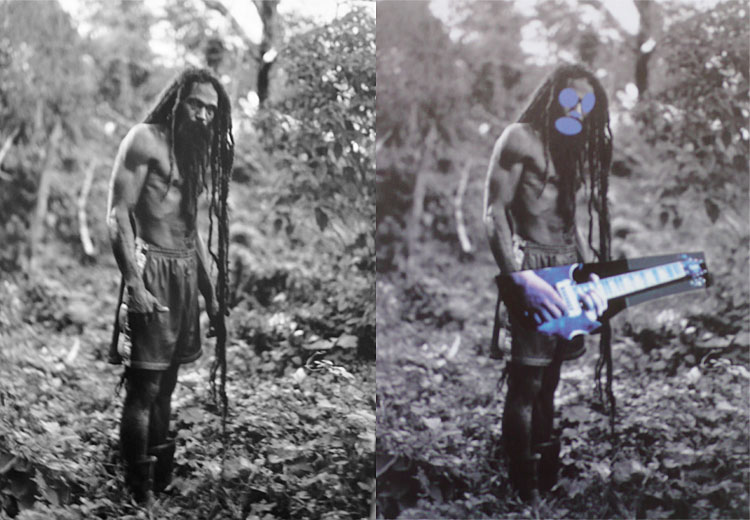
Cariou vs. Prince
- About: [Main Company or Individual] Richard Prince (Artist)
- Media: [Which media is at the centre of the issue? Is it print/web/audio, etc.?] –
- Instagram, Canvas Prints
- Industry: [Main Industry related to the case – Photography, Publishing, Advertising, etc.]
- Photography & Mixed Media Artworks
- Laws or Legal Case: [What laws were breached? Which legislation is discussed? Copyright – CASL – PIPEDA – FIPPA – etc. What was the jurisdiction?] Cariou vs. Prince – Copyright Infringement – US Court of Appeals 2nd Circuit
- Website: [Link to Main Source/ Article]
- The Daily Mail UK. https://www.dailymail.co.uk/femail/article-3097994/Artist-fire-using-people-s-Instagram-photos-exhibition-without-permission-selling-prints-borrowed-images-100-000-EACH.html
Description:
Artist Richard Prince became notable in the media for utilizing other people’s Instagram posts and turning them into his own works of art, which he sold for thousands of dollars at his own art exhibitions. According to the Daily Mail, “Painter and photographer Richard Prince, 65, blew up screenshots of images taken from his Instagram feed and printed them on canvases for his series titled New Portraits, which features photos of famous models, artists and celebrities, as well as racy pictures of unknown people” (Tempesta, 2015). Prince’s appropriation led to a court case called Cariou vs. Prince. (Cariou vs. Prince, 2013)
Legal Issue at Stake:
Several artists, celebrities and high-profile social media figures found out that Mr. Prince had been using their Instagram photography, with some alterations, to create prints and canvas artworks. Some of the celebrities affected included “Kate Moss, Pamela Anderson, singer Sky Ferreira, and model Lara Stone” (Tempesta, 2015). Some of the celebrities decided not to pursue legal action and just let the incident slide as part of social media culture. However, other individuals who were subject to Prince’s project stated that they felt their content or likeness were being appropriated for profit and that they were considering taking legal action. In particular, a photographer called Patrick Cariou decided to pursue Prince for copyright infringement, for utilizing one of Cariou’s famous photography images of Rastafarian culture.
According to the World Intellectual Property Oganization (WIPO), “Copyright infringement is when someone uses the copyright-protected work of someone else, (a book, an article, a song, etc.), without permission.” However, Prince argued his artistic works were Fair Use. According to WIPO, “Fair use is primarily for the use of copyright-protected work for commentary, parody, news reporting, research and education” (Harris, (n.d.)).
Case Summary [Main Points]:
- Patrick Cariou accused Prince of utilizing a photograph that he had previously published in a book of photographs featuring Rastafarian culture. The book was published in Jamaica under the title “Yes, Rasta.” (Cariou vs. Prince)
- Prince modified the original image captions and added his own with his own Instagram handle. This change, in his opinion, made the works new and made them fall until the Copyright Exception of “Fair Use.” (Tempesta, 2015)
- Initially, “In 2011, a judge ruled against Mr Prince” meaning he was found guilty of copyright infringement in the first round of proceedings (Tempesta, 2015).
- However, Prince appealed the decision of the initial court, on appeal had “the ruling overturned in 2013 by the US Court of Appeals for the Second Circuit, which deemed 25 of the 30 images fair-use” (Tempesta 2015).
- In the end, Prince and Cariou settled the case out of court, so the final decision was worked out privately between the parties.
- Industry:Photography, Mixed Media Artworks
- Parties Involved: Richard Prince – Artist vs. Patrick Cariou – Photographer
- Jurisdiction: United States Court of Appeals for the Second Circuit
- Laws & Legislation related to this article: Copyright Infringement – Fair Use Exemption
References & Works Cited
- Cariou v. Prince, No. 11-1197 (2d Cir. 2013). Retrieved from https://law.justia.com/cases/federal/appellate-courts/ca2/11-1197/11-1197-2013-04-25.html
- Cariou vs. Prince. (n.d.). In Wikipedia. Retrieved from: https://en.wikipedia.org/wiki/Cariou_v._Prince#cite_note-2dCir-1
- Harris, L. (n.d.). What to Do If You’re Accused of Copyright Infringement. World Intellectual Property Organization (WIPO). Retrieved from https://www.wipo.int/sme/en/documents/copyright_infringement_fulltext.html
- Tempesta, E. (2015, May 29). Artist Richard Prince under fire after using people’s Instagram photos in exhibition. Daily Mail. Retrieved from https://www.dailymail.co.uk/femail/article-3097994/Artist-fire-using-people-s-Instagram-photos-exhibition-without-permission-selling-prints-borrowed-images-100-000-EACH.html
- Image credits: Boucher, B. (2014, March 19). Landmark Copyright Lawsuit Cariou v. Prince is Settled. Retrieved from Art in America https://www.artnews.com/art-in-america/features/landmark-copyright-lawsuit-cariou-v-prince-is-settled-59702/
 PWR481-W20