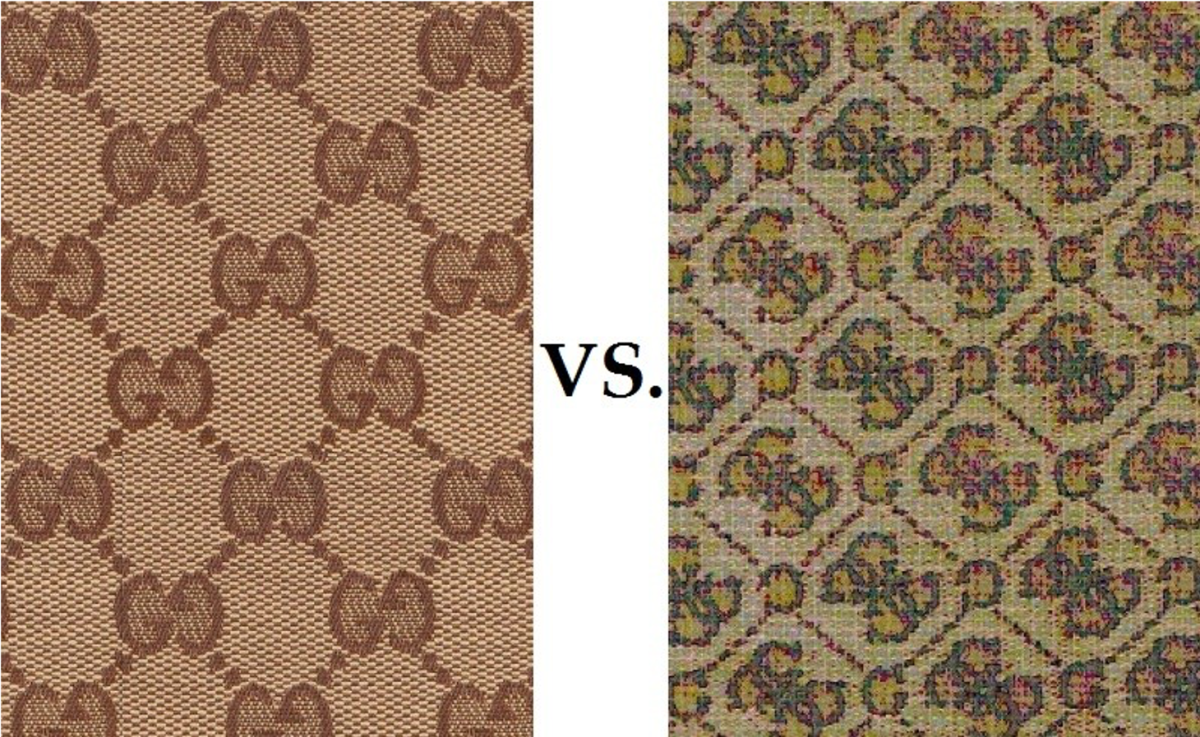
Case Study: Gucci vs. Guess
About: Gucci and Guess Fashion Companies
Media: Design
Industry: Textile and apparel industries
Laws or Legal Case: Gucci vs. Guess – Trademark Infringement- New York Federal Court and Milan Court
Website: BritishVogue. https://www.vogue.co.uk/article/gucci-loses-guess-lawsuit-logo-copyright-case
Description:
Gucci, an Italian luxury clothing brand that was founded by Guccio Gucci in Florence in 1921, is one of the luxury companies to sue apparent copycats. According to Chitrakorn (2018), Guess has been the most famous lawsuit case for Gucci. According to Real Business (2014), Guess, which is an American clothing brand and retailer, is known for being subjected to 12 copyright complaints from 2004 to 2014.
Legal Issues at Stake:
According to Karmali (2013), Gucci first filed a lawsuit against Guess in 2009 in federal court in New York. Gucci claimed that Guess accessories infringed the interlocking “G” print trademarks of its own unique signature. According to the World Intellectual Property Organization (WIPO), “A trademark is a sign capable of distinguishing the goods or services of one enterprise from those of other enterprises and confer an exclusive right to the use of the registered trademark. This implies that the trademark can be exclusively used by its owner or licensed to another party for use in return for payment.” The lawsuit filed by Gucci against Guess was presided by Judge Scheindlin, closed in 2012 resulting in awarding Gucci $4.7 million in damages for Guess infringing its trademarks which then decreased to $456,183. The key factor for trademark infringement in the U.S. was whether customers are likely to get confused. After, Gucci filed lawsuits against Guess on the same copyright infringement in Italy, Australia, China and France and proposed actions with the European Union Intellectual Property Office (The Fashion Law, 2018). However, in 2013, a Milan court ruled in favour of Guess. The judge held that Guess’s Quattro G-diamond pattern is not similar to Gucci’s unique interlocking “G” pattern. The judge believed that Guess had made some implementation to avoid the complete similarities between its own logo and competitor’s unique trademarks (The Fashion Law, 2018). The court held that Gucci’s trademark, which is the letter “G” with dots and the letter “G” with dots serially repeated, is not a distinctive character. Therefore, Gucci’s iconic pattern is not a valid trademark and does not demonstrate a certain commercial source. Other courts in France and Australia also ruled in favour of Guess because the trademark does not look similar to Gucci’s distinctive logo which was the key inquiry for trademark breach in Italy (The Fashion Law, 2018).
Case Summary [Main Points]:
- In 2009, Gucci accused Guess of trademark infringement and claimed that Guess used the interlocking “G” print trademark of Gucci’s iconic signature and took Guess to the federal court in New York (The Fashion Law, 2018).
- In 2012, The US judge Shira Scheindlin awarded Gucci about $456,183 in damages for Guess’s infringement of its iconic signature (The Business of Fashion, 2018).
- After, Gucci filed lawsuits against Guess for the same reason in Italy, France, Australia, and China. Gucci proposed actions with the European Union (“EU”) intellectual Property Office (The Fashion Law, 2018).
- In 2013, the Milan court ruled in favour of Guess. The court claimed that Guess’s G pattern is not similar to Gucci’s distinctive logo. The court also mentioned that some of Gucci’s trademarks including the diamond pattern G, which was registered by Gucci in Italy were invalid (The Fashion Law, 2018).
- In 2015, a court in Paris overruled all the trademark breach claim registered by Gucci against Guess. The judge held that Guess did not infringe in any trademark breach. The judges declared that Gucci’s “G” community registration is not valid which means that Gucci cannot claim rights in those trademarks (The Fashion Law, 2018).
- In 2016, The EU General Court also ruled in favour of Guess and held that the Guess’s interlocking “G” pattern is not related to the Gucci’s logos (The Fashion Law, 2018).
- However, China ruled in favour of Gucci and against Guess. The China court declared that infringement cases were based on whether the trademark looks similar, not whether people might get confused which was also the main inquiry for trademark breach matters in the US (The Fashion Law, 2018).
- In 2018, after a nine-year legal battle between the two companies, they reached an agreement. However, they did not confess the terms of agreement (Chitrakorn, 2018).
Industry:
- Textile and apparel industries
Parties involved:
- Gucci
- Guess
- New York Federal Court
- Courts in Milan, Paris and China
Laws & Legislation related to this article:
- Trademark Infringement – Designs
References and Works Cited
Almost 10 Years Later, Gucci and Guess Make Peace in Global Legal War. (2018, April 18). The Fashion Law. Retrieved March 18, 2020, from https://www.thefashionlaw.com/almost-10-years-later-gucci-and-guess-make-peace-in-global-legal-war/
Chitrakorn, K. (2018, April 19). Gucci and Guess End Nine-Year Trademark Dispute. The Business of Fashion. Retrieved March 18, 2020, from https://www.businessoffashion.com/articles/news-bites/gucci-and-guess-end-nine-year-trademark-dispute
Karmali, S. (2013, May 7). Gucci Loses Legal Battle. British Vogue. Retrieved March 18, 2020, from https://www.vogue.co.uk/article/gucci-loses-guess-lawsuit-logo-copyright-case
Schutte, S. (2019, December 15). Famous Copyright Cases: Copyright Infringement Examples. Real Business. Retrieved March 18, 2020, from https://realbusiness.co.uk/6-famous-copyright-cases/
Trademarks. (n. d). World Intellectual Property Organization (WIPO). Retrieved March 20, 2020, from https://www.wipo.int/trademarks/en/
 PWR481-W20